|
|
|
 |
 |
| Length - 4 days |
 |
| Cost - $925 |
 |
| Max Ratio - 2:1 |
 |
| Capacity - 6 |
 |
Location Index & Leavenworth, WA; Squamish, BC; Red Rock Canyon, NV |
|
 |
 |
| Learn to Lead Course or AMTL 2 or Equivalent Ability to effectively lead traditional 5.6 rock |
|
 |
 |
| Jul 4 - Jul 7, 2010 |
| Aug 15 - Aug 18, 2010 |
|
|
 |
Aid Climbing & Big Wall Techniques |
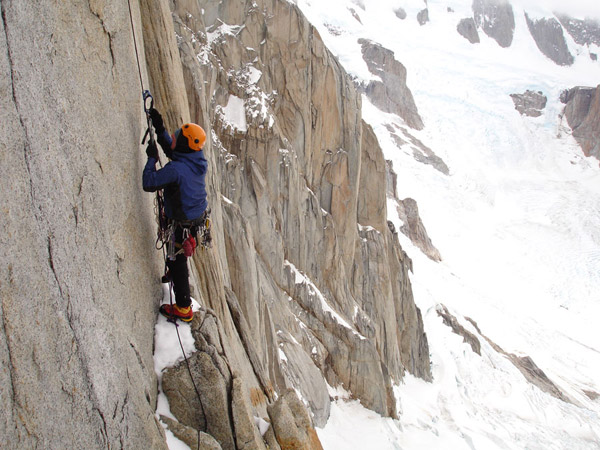
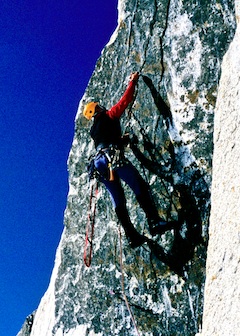
 Climber working his way up Cerro Torre in Patagonia, Argentina. Photo by Andrew Wexler.
Introduction to Aid Climbing
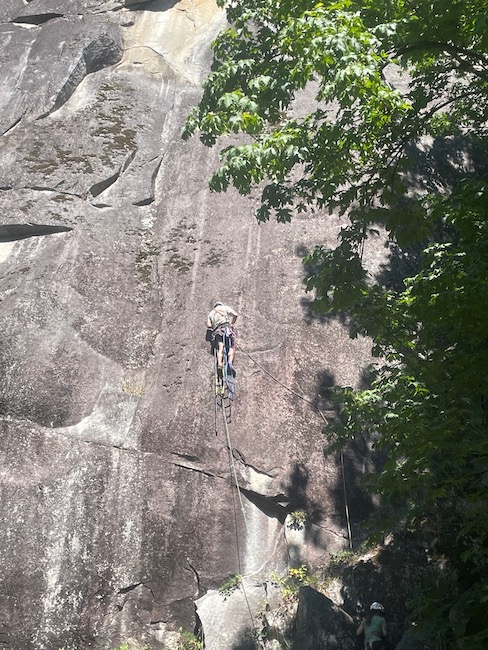
There is a point in every climber's life when he or she looks at a massive vertical rock face and says, "I want to climb that." The problem is that in many cases, the rock is too steep and the holds are too small. Aid climbing is a specific technique that provides climbers with the ability to get up routes that are too hard to free climb.
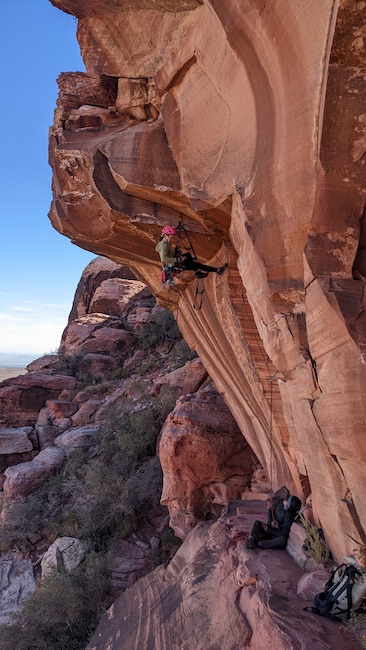
Most people become aware of aid climbing through the lens of big wall climbing. Big walls are routes that usually take more than a day to ascend and often require one to bivy on a portable ledge. Many of these lines require climbers to use direct aid in order to climb through difficult parts of the wall.
After ice climbing, mountaineering, and rock climbing, well-rounded alpinists must be aware of aid techniques. Mountains throughout the world have routes that primarily require moderate free climbing skills, but have short hard sections. A basic understanding of aid opens up thousands of new routes to the well-rounded alpinist.
Course Overview
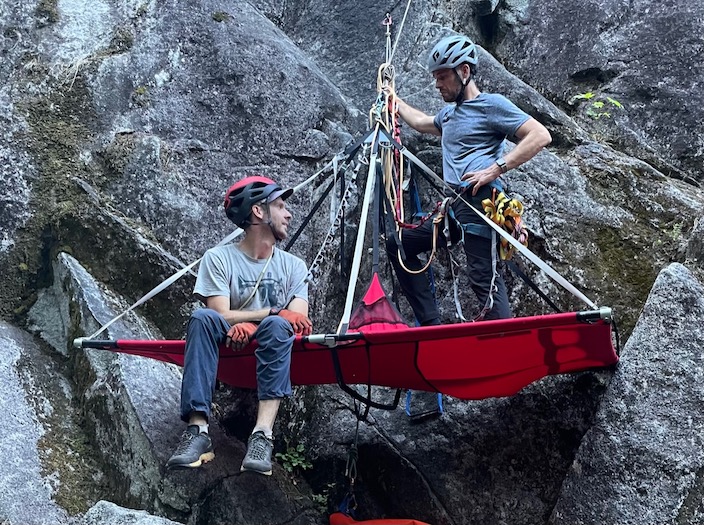
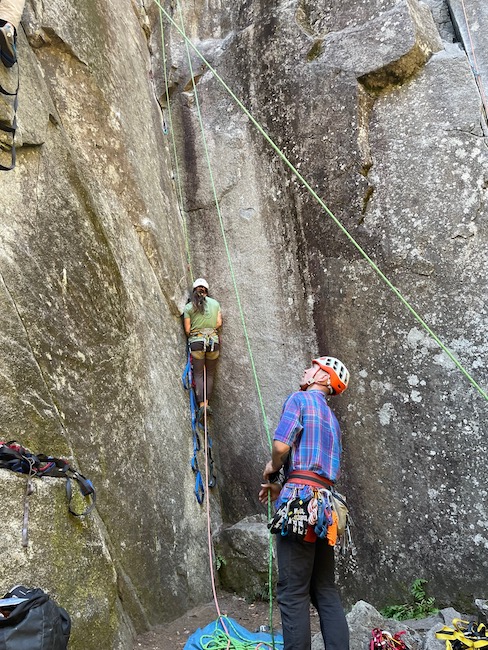
The American Alpine Institute's four-day aid climbing and big wall technique seminar is designed for competent leaders who wish to expand their horizons and their climbing ability by exploring new techniques and concepts. This course will broaden a climber's free climbing ability while introducing a variety of new skills in both free and aid climbing methodology. The highlight of the course will be a night spent on a portable ledge on the side of a cliff.
Due to the highly technical nature of this subject, the Aid Climbing and Big Wall Techniques course will only be offered at a two student to one guide ratio. The course must have a minimum of two students registered to run at the published price.
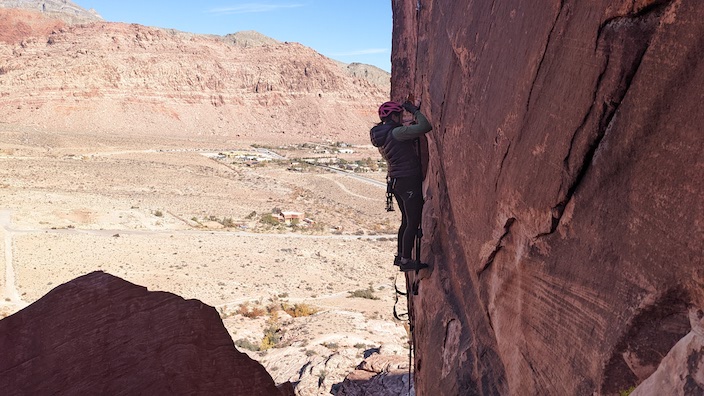
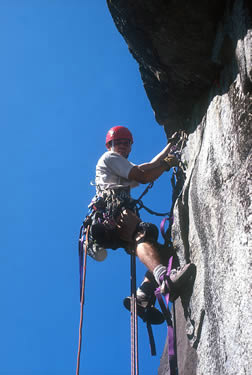
 Climber using aid techniques on big wall route. Photo by Brendan Cusick.
Curriculum Highlights
Advanced Aid and Free Climbing Skills:
- selection & use of personal equipment for an aid climb including specific ropes, harnesses, & equipment
- design concepts, selection & use of technical equipment for mixed aid & free climbing
- advanced rigging for multi-pitch climbing
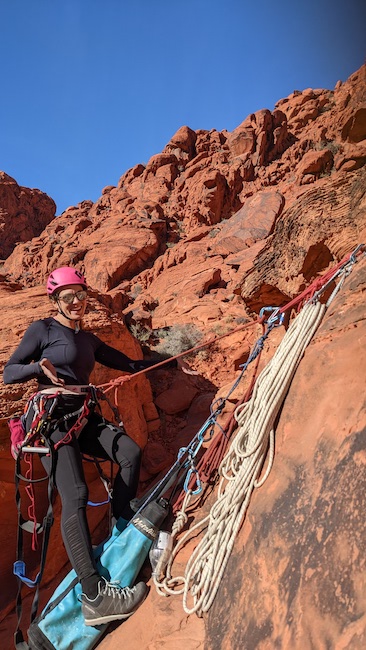
- use of big wall gear & equipment including etriers, daisy chains, mechanical ascenders, haul bags, portaledges, leeper cams, hooks & an assortment of other gear
- use of fixed lines
- strategy for multi-pitch aid or mixed climbs
- strategies for multi-pitch descents
- techniques for hauling, big wall bivies, & for pendulums
- clean aid climbing techniques
- complex hauling systems
- management of hanging belays
- strategies for multi-day routes
Objective Hazards Evaluation & Self-Rescue Skills
- evaluation & prediction of mountain weather patterns
- introduction to the assessment of natural hazards
- individual & team crevasse rescue techniques
Leadership Skills
- technical & personal functions of individuals on an ascent: roles & responsibility
- problem solving: gathering appropriate data & assessment techniques
- evolving leadershiop roles: individual leadership vs. collective decision making
Environmental Protection Skills
- an introduction to vertical ecology
- Leave No Trace travel, camping, & climbing skills
Program Locations
British Columbia: Squamish
Washington: Leavenworth and Index.
Nevada: Red Rock Canyon
|
American Alpine Institute (AAI) |
1515 12th Street Bellingham, WA 98225 info@aai.cc |
© 2009 American Alpine Institute, Ltd. All Rights Reserved
|